


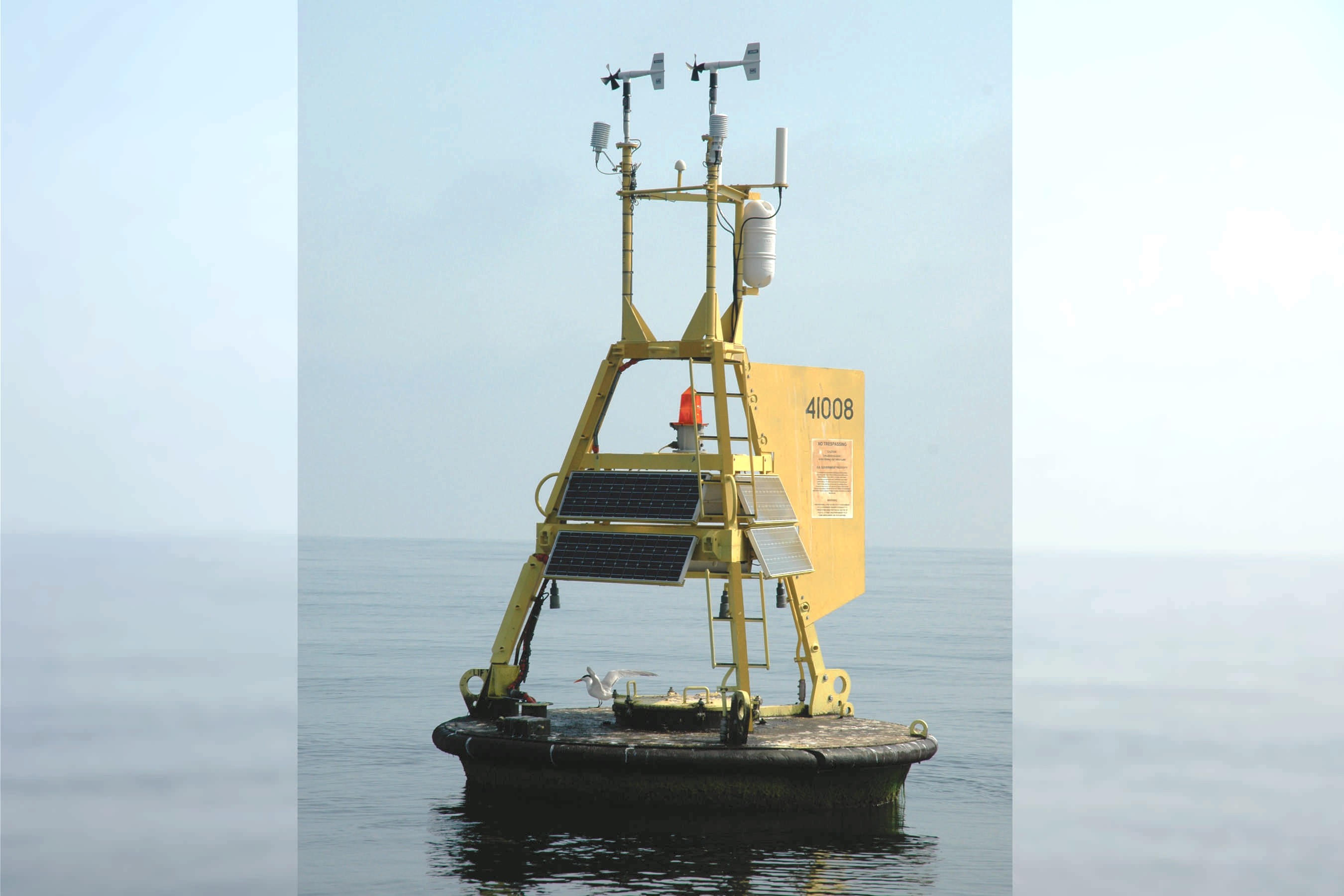
For over two decades, Harsh has been building RF antennas for environmental research and satellite communications. Accurate atmospheric data depends on reliable RF links—we engineer antennas to face harsh environments (pun absolutely intended) when the science matters most.
Originally Synergetics International, our antennas support radiosonde tracking, satellite data collection platforms, and remote monitoring networks operating at 401 MHz. Harsh currently offers two hemispheric models (14A, 15A) and one directional model (18B), each built for performance and durability. Type N connectors come standard.
Each model is built to withstand the elements: 100-knot wind survival, −65°C to +65°C operating range, 5 in/hr rain submersion, 100 lb/ft² ice/snow loading.
Harsh Models 14A and 15A quadrifilar helix antennas are designed for applications requiring omnidirectional coverage with no pointing or tracking required. Ideal for mobile platforms, radiosonde ground stations, marine buoys, and installations where satellite position varies or is unpredictable. Both models provide right-hand circular polarization with hemispheric coverage—the 14A optimized for overhead passes, the 15A for low-elevation angles.

Model 14A — Half-wave QFH optimized for high-elevation satellite passes and overhead communications. 3 dBic gain at zenith with 160° half-power beamwidth. Recommended for radiosonde ground stations and applications where satellites pass above 45° elevation.
Model 15A — Full-wave QFH engineered for low-elevation tracking and extended satellite contact windows. 3.5 dBic gain at 25° elevation angle with 185° half-power beamwidth. Optimized for low-orbit satellites, polar/high-latitude installations, and maximum gain near the horizon.
Common specifications: 401 MHz nominal frequency, ≥4 MHz bandwidth, 50W maximum input power, 50Ω nominal impedance, ≤5 dB axial ratio, sealed G-10 fiberglass radome construction with polyurethane finish.
High-gain crossed Yagi array designed for fixed installations with predictable satellite passes and the ability to aim the antenna. Ideal for timed data collection platforms, scheduled uplink windows, and applications requiring maximum link efficiency when satellite position is known.
Specifications: 401.8 MHz nominal frequency, ≥2 MHz bandwidth, 15W maximum input power, 50Ω nominal impedance, ≤4 dB axial ratio, ≤1.5:1 VSWR, right-hand circular polarization, +11 dBic minimum gain (+14 dBic nominal directivity) with 47° half-power beamwidth, aluminum boom construction, screw-in elements for field assembly, includes adjustable mount with 360° azimuth and 0–90° elevation adjustment.
Deployed by NOAA Global Monitoring Laboratory for radiosonde ground stations, Canadian Meteorological Service ocean buoy networks transmitting to GOES satellites, OTT HydroMet atmospheric research installations, and environmental monitoring programs worldwide.
Recommended by NOAA for use in Software-Defined Radio (SDR) Receiving Systems
Made in Eaton, Colorado. Purpose-built for long-term field deployment where reliability matters.
Harsh International has established terms and conditions of sale. Please review the following the document: Terms & Conditions
Harsh International (Antenna Department)
Phone: +1 (800) 227-1702 or Local: +1 (970) 454-2291
E-Mail: antennas@harshenviro.com
Social


Addresses
Harsh International, Inc.
600 Oak Ave
Eaton, CO 80615
Directions
Phone
Headquarters:
Local: (970) 454-2291
Toll free: (800) 227-1702
Parts & Service Center:
Local: (970) 454-1755
Toll free: (877) 427-7448
Quick Links
🔎︎ Site Search
Dealers
About & Contact
Products
Documentation
Parts & Service
Careers
Social